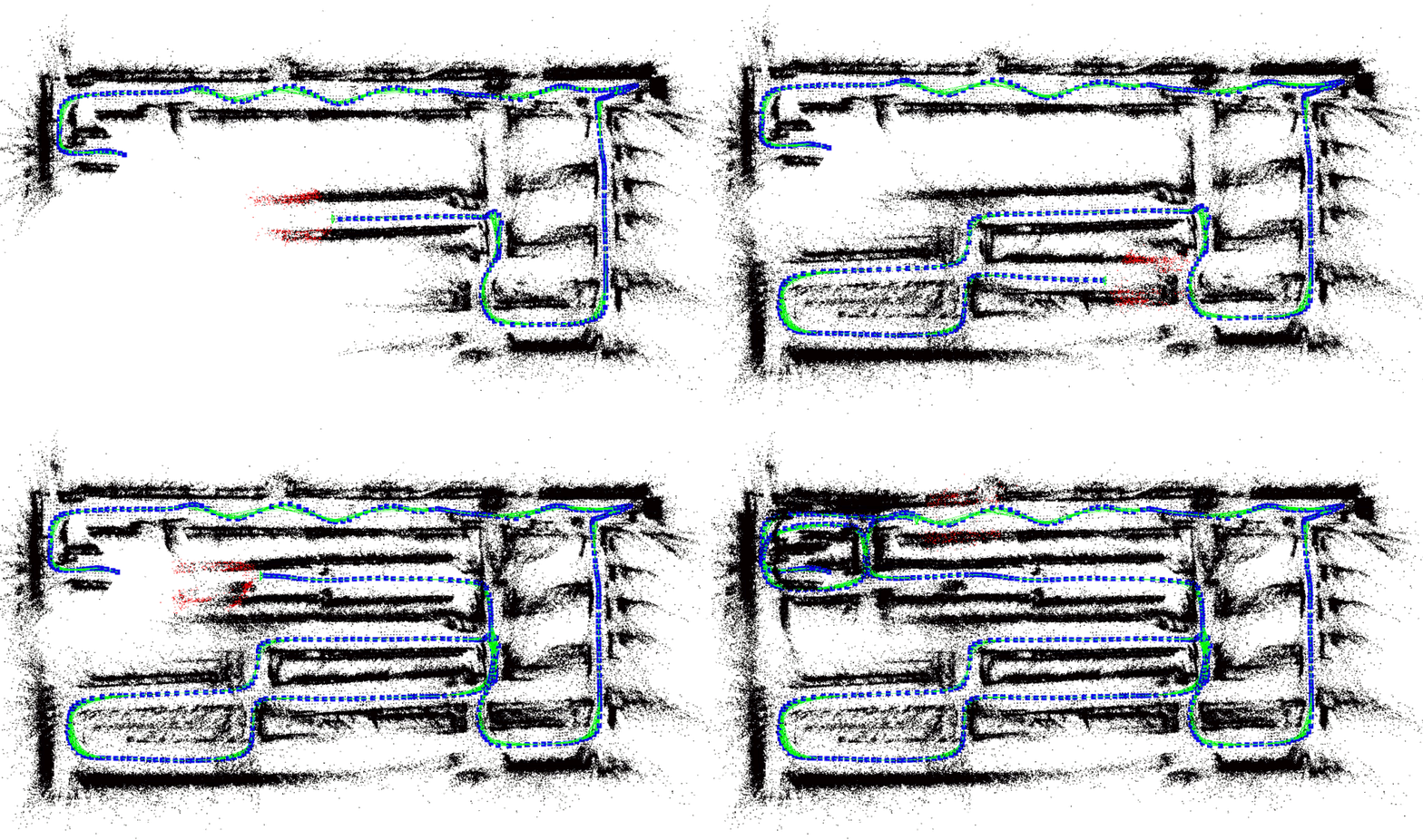
|
|
|
Revisiting Monocular SLAM with Spatio-Temporal Scene Modeling
V. Piedade, L. Manam, M. Yamazaki, P. Miraldo
IEEE/CVF Conference on Computer Vision and Pattern Recognition (CVPR), 2026
Project
·
Paper
·
Code
·
Video
·
Poster
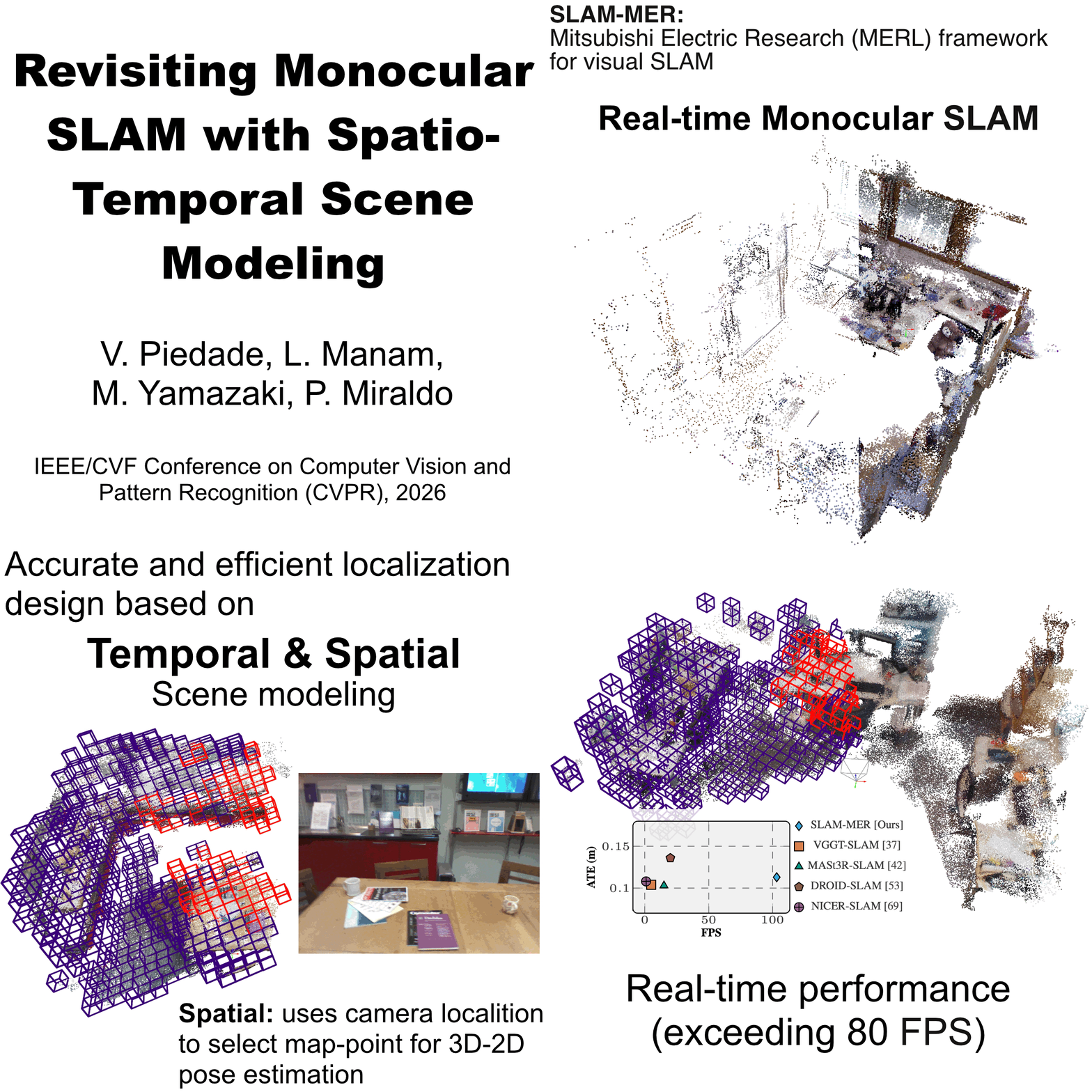
This work proposes a novel pipeline for real-time monocular V-SLAM, SLAM-MER,
that (1) introduces a new spatio-temporal camera localization approach, and
(2) achieves real-time performance (>80 FPS). The framework, developed from
scratch in C++, is open-source and modular to allow further V-SLAM development.
|
|
|
SAC-GNC: SAmple Consensus for adaptive Graduated Non-Convexity
V. Piedade, C. Sidhartha, J. Gaspar, V. M. Govindu, P. Miraldo
IEEE/CVF International Conference on Computer Vision (ICCV), 2025
Project
·
Paper
·
Code
·
Video
·
Poster
Highlight paper (2.3%)
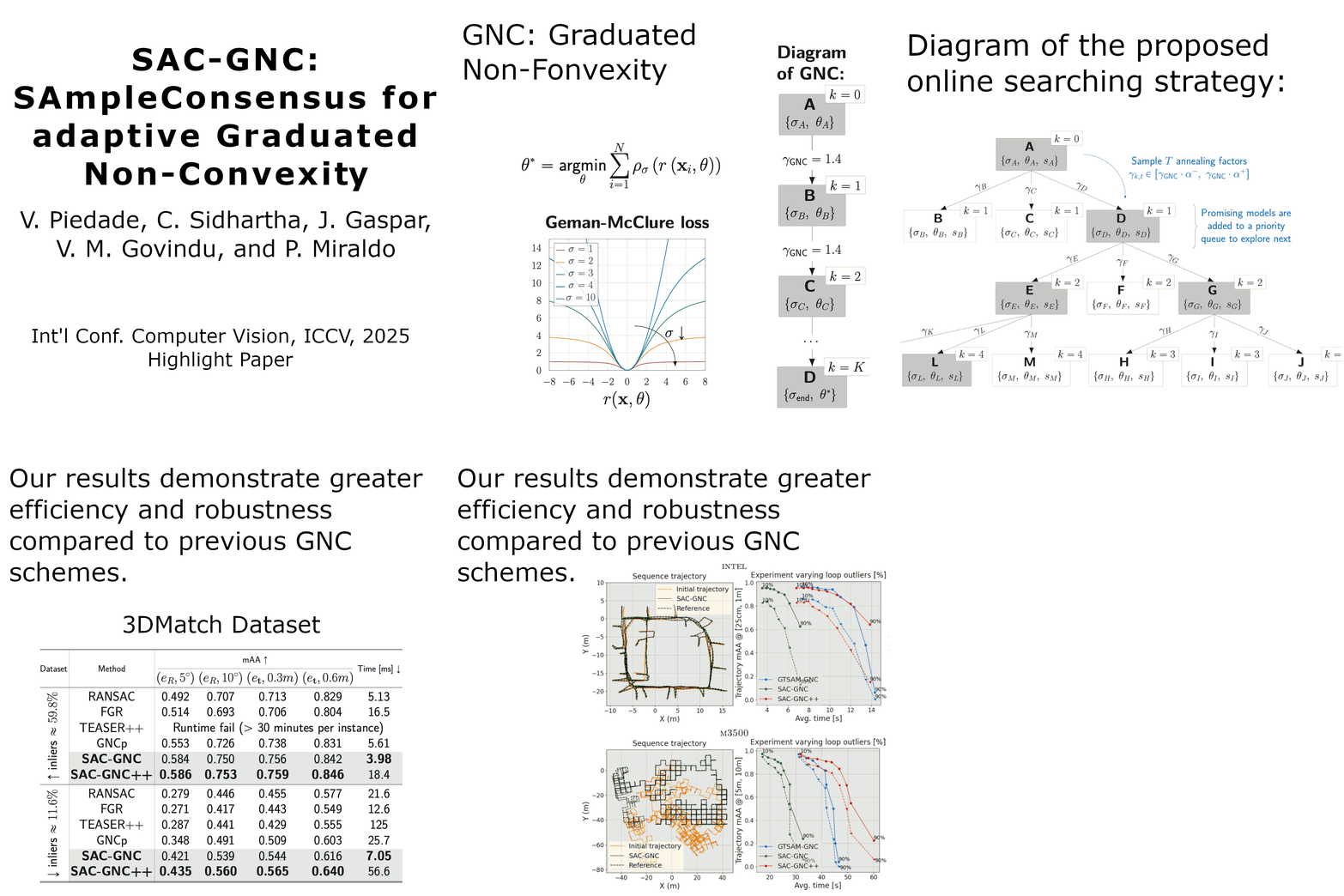
SAC-GNC is a novel adaptive annealing strategy for Graduated Non-Convexity (GNC) that
integrates sample consensus into the classical GNC framework. The addition of sample
consensus improves robustness and reduces dependence on predefined parameters. The
effectiveness of this approach is demonstrated in point cloud registration and pose
graph optimization tasks.
|
|
|
A Probability-guided Sampler for Neural Implicit Surface Rendering
G. D. Pais, V. Piedade, M. Chatterjee, M. Greiff, and P. Miraldo
European Conference on Computer Vision (ECCV), 2024
Project
·
Paper
·
arXiv
·
Video
·
Poster
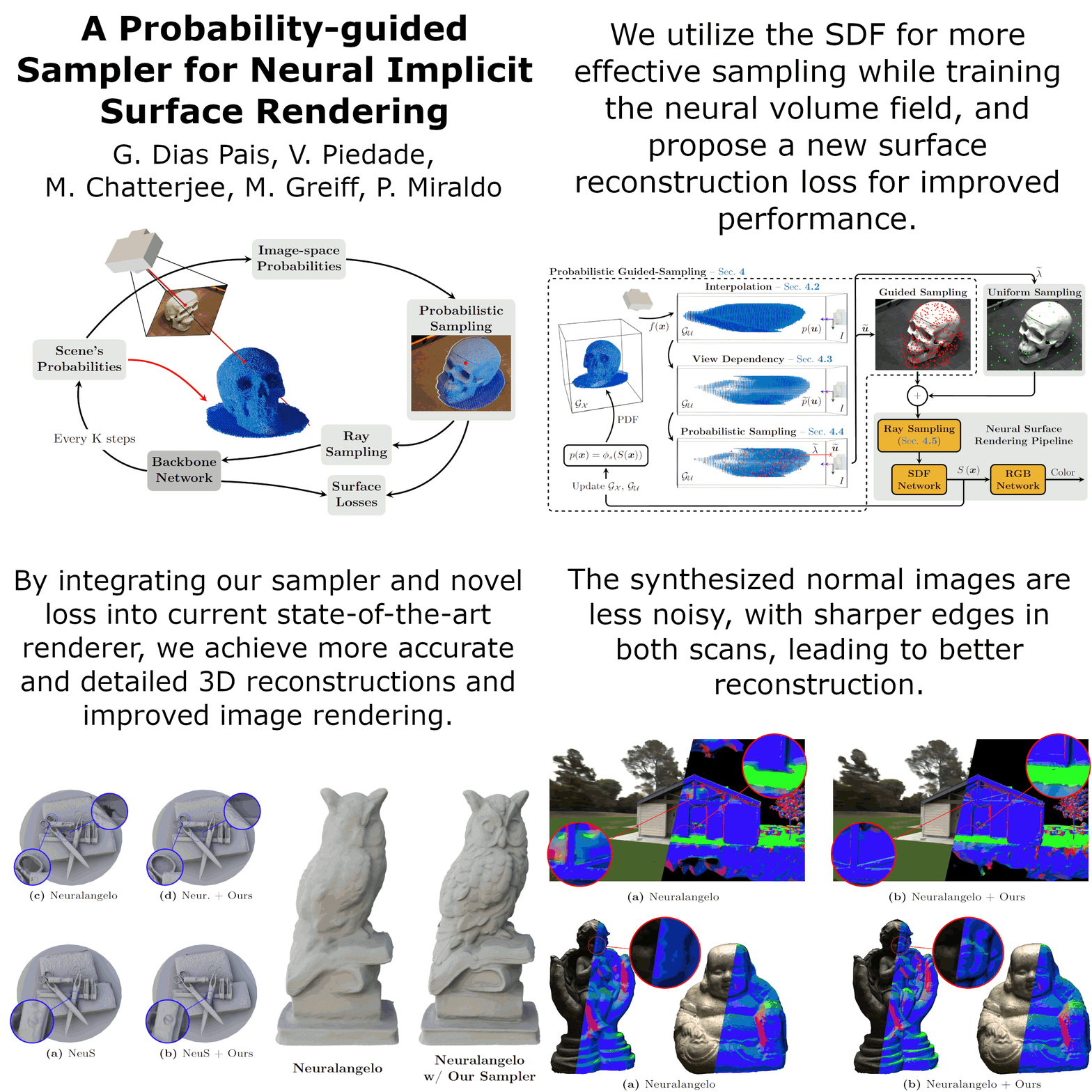
We propose a novel pixel sampler for neural implicit rendering that leverages the
scene's Signed Distance Function (SDF). This approach achieves sharper reconstructions
and improved performance in less-observed regions without requiring additional prior data.
|
|
|
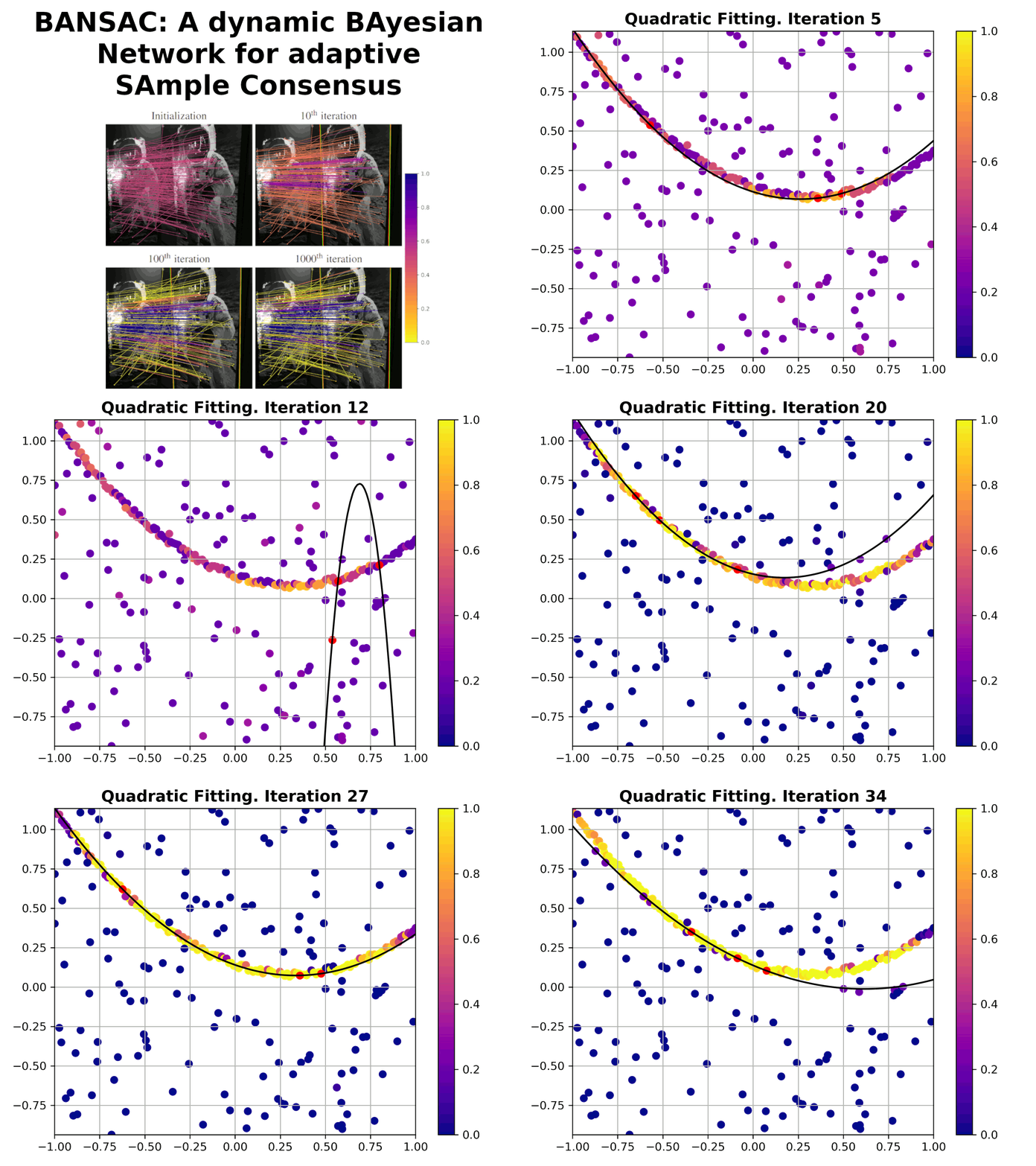
BANSAC: A dynamic BAyesian Network for adaptive SAmple Consensus
V. Piedade, P. Miraldo
IEEE/CVF International Conference on Computer Vision (ICCV), 2023
Project
·
Paper
·
arXiv
·
Code
·
Video
·
Poster
BANSAC is a novel sampling strategy for RANSAC. We introduce a dynamic Bayesian network
that iteratively updates the inlier probabilities of individual data points. In each
iteration, these updated probabilities guide the sampling process. This approach outperforms
state-of-the-art baselines in terms of both accuracy and efficiency.
|
 CV
CV